




Behind the Wheel Lessons in Ohio: Why Professional Training Matters More Than Ever
Behind the wheel lessons Ohio have never been more important — and the conditions that make them essential have never been more demanding. Ohio roads in 2025 carry more congestion, more distracted drivers, more unpredictable weather, and more complex vehicle technology than any previous generation of new drivers had to navigate.
For both teens meeting the state’s legal requirements and adults seeking skill and confidence, professional structured driving instruction is the most effective path to becoming a safe driver.
At Youth Driving Schools — with locations in Dayton, Cincinnati, Columbus, and Cleveland — thousands of teens and adults complete behind the wheel training every year. Our instructors observe the same gaps consistently:
students arrive knowing how a car works but not knowing how to drive — and those two things are not the same. This guide covers everything families need to know about professional behind the wheel lessons in Ohio, including what sessions cover, what Ohio law requires, how training prepares students for the BMV road test, and why professional driver education reduces crash risk by 50 to 75 percent.
What behind the wheel Lessons Really Are — and Why They Differ from Parent Practice
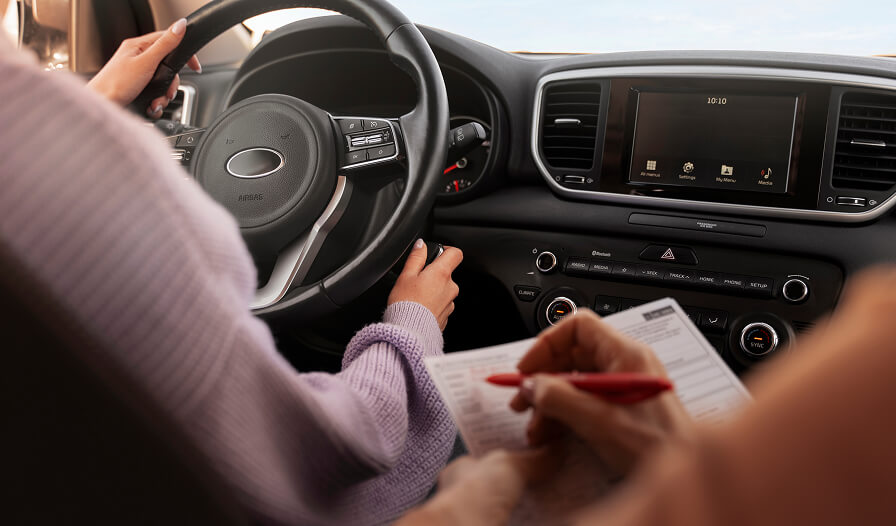
behind the wheel lessons are not informal practice drives. They are structured, curriculum-based, state-regulated, safety-focused training sessions delivered by a licensed professional instructor in a dual-control vehicle — a car equipped with an independent brake pedal and safety controls accessible to the instructor at any moment. This dual-control architecture makes professional instruction categorically safer than practice in a standard family vehicle.
How Professional Instruction Differs from Parent-Taught Driving
The most common question families ask is whether parent-supervised practice can replace professional instruction. The answer is no — and the difference is structural, not a matter of parental effort or commitment.
Parents teach survival driving — the habits and patterns they have developed over years of personal experience, many of which include rolling stops, one-hand steering, incomplete mirror use, inadequate following distance, and lane positioning errors that an experienced driver compensates for automatically. Parents teach what they do, which is often not what the Ohio BMV requires or what safety research recommends.
Professional instructors teach evidence-based driving. They know the exact Ohio BMV road test standards, the specific maneuvers examiners evaluate, the automatic failure conditions, the lane positioning requirements, the signal timing expectations, and the scanning habits that trained observers watch for.
They correct errors immediately and systematically — before those errors become automatic habits. They also teach techniques most parents never formally learned: the SIPDE hazard prediction framework, the 10-4-2 scanning rotation, and the five defensive driving foundations that distinguish reactive drivers from proactive ones.
Why Ohio Law Requires behind the wheel Lessons for Teen Drivers
Ohio’s Graduated Driver Licensing system mandates 8 hours of professional behind the wheel instruction for every teen driver under 18. This requirement exists alongside — not instead of — 24 hours of classroom driver education and 50 hours of parent-supervised practice. The three components serve different purposes and none substitutes for another.
The 8-hour professional training requirement specifically exists because Ohio data consistently shows that professionally trained teen drivers are involved in significantly fewer crashes than those trained exclusively by parents. A teen who completes a professional BTW program at Youth Driving Schools arrives at the Ohio BMV road test with specific preparation for the exact evaluation criteria examiners apply — something parent-taught preparation cannot replicate.
Why Adults in Ohio Benefit from behind the wheel Training
Ohio does not legally require adults over 18 to complete professional behind the wheel training, but the practical case for it is compelling. The adult driving lessons program at Youth Driving Schools serves six distinct adult student profiles:
complete beginners who never learned at 16, international residents adapting to Ohio road conventions, adults who have failed the BMV road test and need targeted correction, adults with driving anxiety requiring patient confidence-building instruction, adults who need a license for career reasons, and licensed adults returning after extended breaks from driving. For all of these students, professional behind the wheel instruction in a dual-control vehicle with a licensed Ohio instructor is the most efficient and reliable path to safe, confident driving.
What Students Learn During behind the wheel Lessons in Ohio
The Youth Driving Schools behind the wheel curriculum follows a structured six-phase progression for both teen and adult students. Each phase builds directly on the previous one — no student advances to the next phase before demonstrating consistent readiness in the current one.
Phase 1 — Vehicle Fundamentals and Control Mastery
The foundation of every behind the wheel program is physical comfort and mechanical understanding of the vehicle. In Phase 1, students learn correct seat, steering wheel, and mirror positioning; smooth gas and brake control without jerking or lurching;
steering technique — including hand-over-hand for tight turns, push-pull for standard curves, and straight-line steering at highway speeds; lane centering using visual reference points rather than the hood; judging vehicle width when passing obstacles; making complete, full stops; and reading the vehicle’s feedback — tire noise, handling changes, braking response, and acceleration feel.
Students who advance before these fundamentals are consistent and automatic will struggle with every phase that follows. Youth Driving Schools instructors do not advance students on a time schedule — they advance students on a readiness basis.
Phase 2 — Neighborhood and Low-Traffic Driving
With vehicle control established, students begin driving on public roads in low-speed, low-density residential environments. Phase 2 focuses on right-of-way rules at all intersection types, systematic scanning habits — looking far ahead, checking mirrors regularly, monitoring side streets and driveways, proper turn technique into the correct target lane, controlled stopping at signs and signals with full stops, identifying and responding to pedestrians, and adjusting speed smoothly for residential zones, school areas, and traffic circles.
This is the phase where students learn the difference between operating a vehicle mechanically and navigating a shared environment responsibly. Most students who practiced with parents have gaps in this phase — particularly in mirror use, stop sign compliance, and turning lane discipline.
Phase 3 — City Driving and Traffic Navigation
Phase 3 introduces the complexity of multi-lane urban environments. Students practice lane selection and maintenance on roads with multiple lanes in each direction, lane changes using the Mirror–Blinker–Shoulder–Go sequence, maintaining safe following distance in stop-and-go traffic, reading traffic light timing to approach intersections correctly, unprotected left turns — the highest-risk maneuver in urban driving — responding to transit vehicles, cyclists, and pedestrians in high-density conditions, and managing the unpredictable behavior of other drivers without panic or aggression.
City driving is where professional instruction delivers its most significant value. The correction of unsafe habits — following too closely, changing lanes without blind-spot checks, turning into the wrong lane — happens in Phase 3 before those habits become automatic.
Phase 4 — Highway and Freeway Training
Highway driving is the phase that produces the most anxiety in new and returning drivers — and the phase that professional instruction eliminates most effectively. Phase 4 covers on-ramp acceleration to highway merge speed, timing the gap in traffic for a safe merge, maintaining lane position at 55 to 70 mph, lane changes at highway speed using full mirror-blinker-shoulder protocol, following distance management at speed (minimum 4 to 5 seconds), responding to faster and slower traffic without abrupt speed changes, identifying and using the correct exit ramp with appropriate deceleration timing, and highway driving in moderate traffic before advancing to heavy conditions.
Most adult students who fear highway driving — including those who have avoided highways for years — resolve that fear within one to two structured highway sessions with a licensed instructor who can intervene if needed and debrief each decision immediately after it is made.
Phase 5 — Parking Mastery for the Ohio BMV Skills Test
The Ohio BMV road test begins with a parking skills evaluation that is independent of the road test — and which must be passed on the same visit. Phase 5 specifically prepares students for the exact parking tasks the BMV evaluates: forward box parking into a marked space, reverse box parking into a marked space, straight-line backing, and parallel parking at applicable locations.
Youth Driving Schools teaches parking using precise visual reference points, mirror-based alignment cues, wheel-timing sequences, and consistent entry angles — not improvisation. Students learn a repeatable system that produces the same result every time, eliminating the guesswork that causes most parking test failures. The backing-speed standard for the Ohio BMV skills test is significantly slower than most students practice — Youth Driving Schools specifically trains the 1 mph creep speed that examiners expect.
Phase 6 — Defensive Driving and Risk Avoidance
The final and most important phase of behind the wheel training teaches students to predict and prevent hazards before they develop — not just respond to them after they appear. Phase 6 covers the SIPDE decision-making framework (Scan, Identify, Predict, Decide, Execute), the 10-4-2 scanning rotation for continuous environmental awareness, the 3-second following distance rule with weather-based extensions, space cushion management in all traffic environments,
night driving techniques including low-beam use and increased following distance, managing road anxiety and stress under real traffic pressure, and recognizing and responding safely to aggressive, distracted, and impaired drivers. Defensive driving is the phase that produces drivers who are genuinely safe — not just technically compliant. It is the difference between a driver who passes the BMV test and a driver who drives well for life.
Start Behind the Wheel Lessons in Ohio with Confidence
Behind the wheel lessons in Ohio turn nervous beginners into safe, confident drivers through structured, phase-by-phase instruction that parent practice alone cannot match. For teens, these 8 hours are a state requirement; for adults, they are the fastest route to passing the BMV test and driving safely for life. Either way, professional behind the wheel lessons in Ohio build the habits that prevent crashes.
Not sure where this fits in the bigger picture? See the full Ohio teen driver’s license process, and review the federal NHTSA teen driving resources on why supervised, structured training matters most for new drivers.
Ready to get started? Enroll in the Youth Driving Schools Teen Program or Adult Program and train with licensed instructors in dual-control vehicles across Dayton, Cincinnati, Columbus, and Cleveland.
.webp)