





Ohio Weather Driving Safety: Why Ohio Roads Are Among the Most Dangerous in America
Ohio weather driving safety is one of the most consequential — and most undertaught — topics in driver education. Ohio is one of the most weather-unpredictable states in the country, and that variability creates driving conditions that challenge even experienced drivers.
In a single week, an Ohio driver can encounter heavy rain, black ice, zero-visibility fog, sudden snow squalls, high winds, flash freezing, glare ice, and wet autumn leaves — which are nearly as slippery as ice and far less anticipated.
The data is clear. According to the Federal Highway Administration’s Road Weather Management Program, weather-related crashes account for approximately 23% of all vehicle collisions annually. Snow and ice increase vehicle stopping distance by over 400% compared to dry pavement.
Fog produces more fatal chain-reaction crashes per incident than rain or snow. And rain — despite feeling less dangerous than winter weather — causes more total accidents than any other weather condition in Ohio because drivers consistently underestimate its risk.
At Youth Driving Schools — with locations in Dayton, Cincinnati, Columbus, and Cleveland — weather conditions are incorporated into every teen behind-the-wheel training session from the very first lesson. Understanding how each weather condition changes vehicle behavior is not optional knowledge — it is the foundation of driving safely on Ohio roads year-round.
How Ohio’s Unique Weather Patterns Create Hidden Driving Risks
Ohio’s geographic position at the intersection of multiple weather systems makes its conditions more unpredictable than most states. The state sits in the path of arctic jet streams that produce sudden temperature drops, receives lake-effect snow events near Cleveland and Toledo driven by Lake Erie, and experiences warm southern air masses that generate rapid thunderstorms and dense fog.
Temperature swings of 20 to 40 degrees Fahrenheit within a single day are common from October through April — creating the repeated freeze-thaw cycles that produce the most dangerous road condition of all: invisible black ice.
Why New and Teen Drivers Face Greater Risk During Weather Changes
Every weakness in a new driver’s skill set is amplified by adverse weather. Teen drivers who struggle with lane centering on a clear day will struggle significantly more in rain. Adults who brake too hard on dry pavement will lose control faster on a wet or icy surface. Weather does not create new problems — it magnifies existing ones to a level where consequences become serious.
The specific vulnerabilities of new drivers in weather conditions include: no experience with how traction changes across different surface conditions, no muscle memory for smooth braking pressure under low-grip situations, no exposure to hydroplaning or skid recovery, inability to read road surface texture visually (shiny asphalt = slippery), and no understanding of micro-climate hazards such as bridges freezing before flat roads, rural intersections icing faster than urban roads, and the first minutes of rain being the most dangerous.
Professional driving instruction at Youth Driving Schools addresses each of these gaps before students face them alone. The emergency winter driving situations guide provides step-by-step responses to the most dangerous weather-related driving emergencies on Ohio roads.
The Psychology of Driving in Ohio Weather — What Most Drivers Don’t Know
Safe driving in Ohio weather is 80% mental and 20% mechanical. The physical inputs — brake pressure, steering angle, acceleration — matter. But the decisions that precede those inputs determine whether the driver reaches the situation with enough time and space to respond correctly. Weather driving psychology involves predicting risk before it materializes rather than reacting after it has already developed.
Experienced drivers read environmental signals continuously: if the overnight temperature dropped below 32°F and the road surface looks wet and dark, that surface may be black ice rather than water — and approaching it at normal speed is dangerous regardless of how the road appears. If visibility begins dropping and the horizon disappears, fog is thickening and speed must be reduced before the driver can no longer see far enough to stop.
If the first drops of rain have just started, the road surface is at its most slippery — more so than during heavy rain — because road oils are rising to the surface before being washed away. These are prediction habits, and they must be taught. They do not develop automatically through general driving experience. Understanding why distracted driving is particularly deadly in wet conditions — because weather already reduces the driver’s environmental margin — is part of the complete Ohio weather driving safety picture.
Rain Driving Safety in Ohio: The Most Underestimated Hazard
Rain causes more total vehicle accidents in Ohio than snow, ice, and fog combined. This statistical reality surprises most drivers — because rain feels familiar and manageable in a way that ice does not. That familiarity is the danger. Drivers who would slow significantly in a snowstorm often maintain normal speeds in rain, not recognizing that their stopping distance has already increased significantly, their visibility has already decreased, and their traction is already compromised.
How Rain Physically Changes Ohio Road Surfaces in 5 Layers
Rain does not create a single, uniform driving hazard. It creates five distinct and progressively dangerous surface conditions that develop and resolve over time.
Layer 1 — The Oil Layer develops during the first 10 to 15 minutes of rain. Road surfaces accumulate oil deposits from vehicles over time, and when rain begins, these oils rise to the surface before being washed away. This layer makes the road significantly more slippery than either dry pavement or fully wet pavement. The first minutes of a rainstorm are consistently the most dangerous driving period.
Layer 2 — The Water Film forms as rain continues. Even a thin film of water between tire and road reduces grip dramatically. Tread depth becomes critical at this stage — bald or worn tires lose traction significantly faster than new tires with full tread depth.
Layer 3 — The Hydroplaning Zone develops at moderate speeds. At speeds as low as 35 to 45 mph, a vehicle can begin to float on top of accumulated water rather than maintaining contact with the road surface. This risk increases with speed and decreases with properly maintained tires.
Layer 4 — Visual Distortion compounds all physical hazards. Headlights from oncoming vehicles reflect off wet pavement at angles that reduce visibility and make lane markings harder to distinguish. Wet road surfaces change the visual character of the driving environment in ways that new drivers have not learned to interpret.
Layer 5 — Hidden Puddle Risk appears in areas of uneven pavement. Small puddles can produce sudden steering pull — a jerking motion in the wheel — that catches unprepared drivers off guard and can cause loss of lane position.
Hydroplaning: The Most Misunderstood Rain Driving Danger
Hydroplaning occurs when vehicle tires lose contact with the road surface and float on accumulated water. It can happen at speeds as low as 35 mph with worn tires, or at highway speeds even with reasonably maintained tires. The sensation is sudden and disorienting — the steering wheel feels light, the vehicle does not respond to directional inputs, and braking produces no change in speed or direction.
The instinctive responses to hydroplaning — slamming the brakes, yanking the steering wheel, or accelerating — all worsen the situation immediately. The correct response is to ease off the accelerator gently without braking, keep the steering wheel straight rather than turning, and allow the tires to re-establish contact with the road surface naturally as vehicle speed decreases.
This response must be practiced and understood before the situation occurs — panic responses in a hydroplane are consistently what turns a recoverable loss of traction into a collision.
Rain Combined with Night Driving: One of Ohio’s Deadliest Combinations
Night rain produces a driving environment that is more visually complex and more physically hazardous than either condition alone. Lane markings that are visible in daylight become difficult to distinguish on a wet night road.
Headlight glare from oncoming vehicles reflects off the wet surface at angles that create momentary blindness. Road texture — the visual cue that tells an experienced driver whether a surface is likely to be wet, icy, or dry — becomes extremely difficult to read through the combination of rain, darkness, and reflected light.
The correct responses to night rain driving include switching to low beams rather than high beams (which worsen glare reflection), reducing speed to allow for the longer stopping distance on wet surfaces, increasing following distance to a minimum of 5 to 7 seconds rather than the standard 3, centering the vehicle in the lane using road edge markings rather than center lines when center lines are not visible, and avoiding sudden lane changes or braking. These are specific skills that new drivers must practice in safe conditions before encountering night rain independently.
Snow Driving Safety in Ohio: Slowing Down Saves Lives
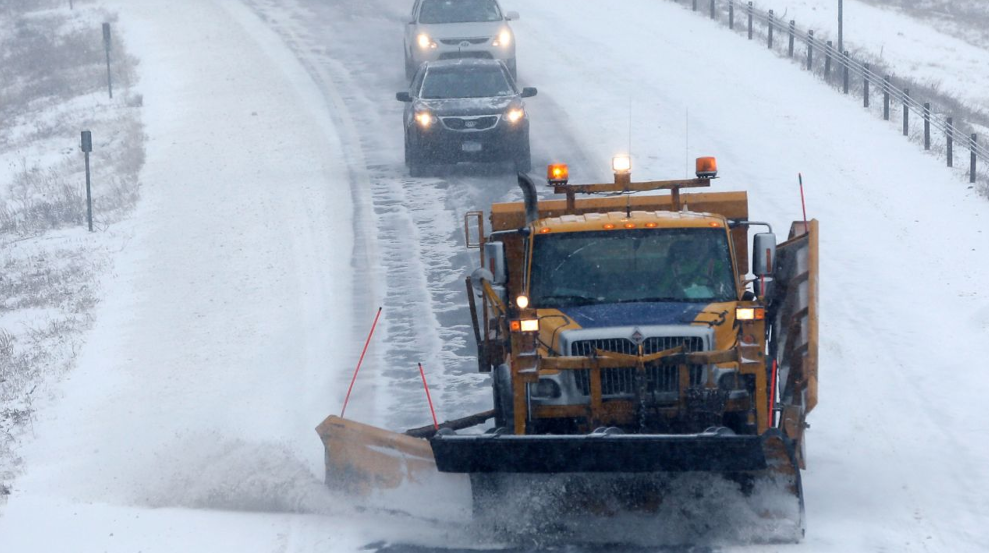
Snow reduces traction and visibility at the same time, which is why speed is the single biggest factor in Ohio snow crashes. On snow-covered roads, double your following distance, accelerate and brake gently, and steer with smooth, deliberate inputs. Avoid cruise control entirely. Because northern Ohio also experiences sudden lake-effect bands, conditions can change within a mile. For a full breakdown of snow handling, see our guide to winter driving survival skills in Ohio.
Ice and Black Ice: Ohio Weather Driving Safety at Its Most Dangerous
Ice is the deadliest Ohio road condition because it is often invisible. Black ice forms on bridges, overpasses, and shaded areas first — these surfaces freeze before regular roads because cold air circulates above and below them. If you hit ice, do not brake hard or steer sharply; ease off the gas and keep inputs gentle. Knowing exactly how to respond is critical, which is why we cover it step by step in our guide to emergency winter driving situations.
Fog Driving Safety: Why High Beams Make It Worse
Fog is one of the most underestimated Ohio weather hazards because drivers instinctively do the wrong thing — switch on their high beams. High beams reflect off the water droplets in fog and create glare that reduces visibility further. Instead, use low beams or dedicated fog lights, slow down well below the speed limit, increase following distance, and use the right edge line of the road as a guide rather than oncoming headlights. If fog becomes too thick to see, pull completely off the road and turn on your hazard lights.
Severe Storms, High Winds, and Flooding in Ohio
Ohio thunderstorms bring heavy downpours, sudden wind gusts, and flash flooding. In a downpour, reduce speed to prevent hydroplaning and turn on your headlights so other drivers can see you. High winds require a firm grip and extra space around high-profile vehicles. Never drive through a flooded road — just six inches of moving water can sweep a vehicle away. As the National Weather Service warns, “Turn Around, Don’t Drown.” When a storm makes driving unsafe, the right choice is to delay your trip until it passes.
Mastering Ohio Weather Driving Safety All Year Round
Ohio weather driving safety is not a winter-only skill — rain, fog, storms, snow, and ice each demand different techniques throughout the year. The drivers who stay safe are the ones who recognize changing conditions early, adjust speed and spacing before trouble starts, and practice these responses with an instructor rather than discovering them in an emergency.
Local forecasts from the National Weather Service in Cleveland help you plan ahead for changing Ohio conditions. To build these skills behind the wheel, explore the Youth Driving Schools Teen Program and Adult Program.


