





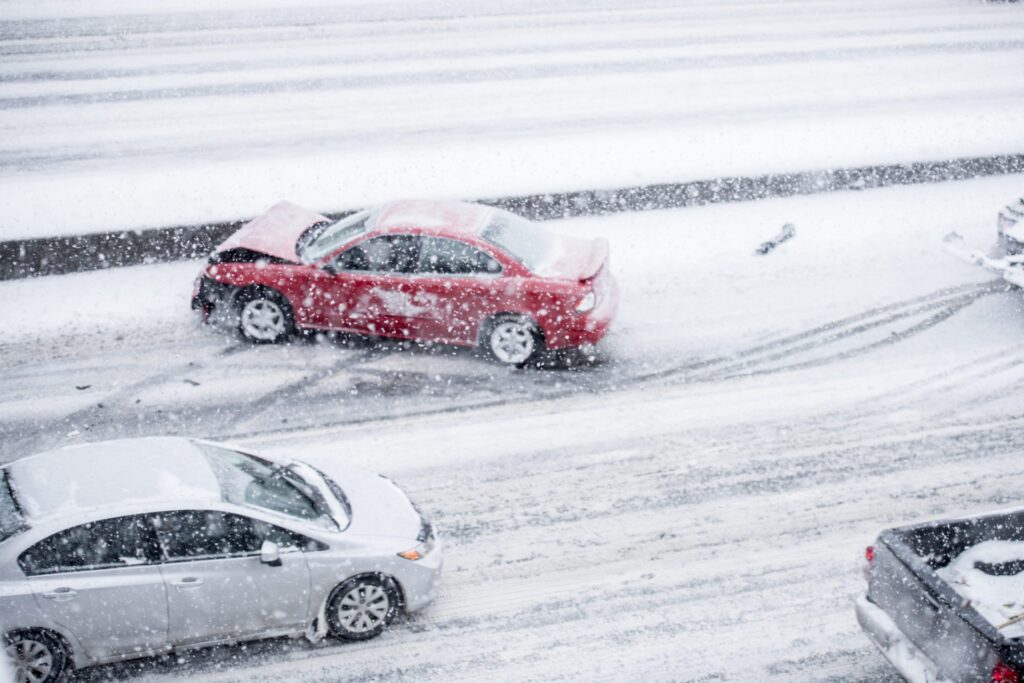
Emergency winter driving situations are among the most dangerous challenges any driver — new or experienced — can face on Ohio roads. Knowing exactly how to respond to each emergency winter driving situation in the first 1 to 3 seconds is the difference between regaining control safely and losing it entirely.
New drivers often panic because they have never been taught the physics of traction, skidding, or ice. This guide breaks down every major winter driving emergency with step-by-step action instructions used by Youth Driving Schools instructors across Dayton, Cincinnati, Columbus, and Cleveland.
Emergency Winter Driving Situations: Why the First 3 Seconds Are Critical
Emergency winter driving situations are among the most dangerous challenges any driver — new or experienced — can face on Ohio roads. Knowing exactly how to respond to each emergency winter driving situation in the first 1 to 3 seconds is the difference between regaining control safely and losing it entirely.
When winter weather turns dangerous, the correct reaction determines whether the driver regains control safely, slides into another lane, spins out, ends up in a ditch, or collides with another vehicle. New drivers often panic because they have never been taught the physics of traction, skidding, or ice. This guide breaks down every major winter driving emergency with step-by-step action instructions used by Youth Driving Schools instructors across Dayton, Cincinnati, Columbus, and Cleveland.
Emergency 1 — How to Recover from a Skid When Your Car Slides on Ice
Loss of traction on ice is the most common winter emergency for new drivers. It can be triggered by driving too fast for conditions, turning too sharply, hitting a patch of black ice, braking too hard, or accelerating while turning.
What NOT to Do When Your Car Starts Sliding
The instinctive reactions most drivers have in a skid make the situation dramatically worse:
- Slamming the brakes
- Yanking the steering wheel
- Panic turning in the wrong direction
- Accelerating suddenly
- Freezing up entirely
Hard braking locks the tires and removes all steering control. A yanked wheel causes overcorrection. These reactions must be unlearned — and that is exactly what behind-the-wheel training at Youth Driving Schools addresses.
Step-by-Step Skid Recovery Using the “Light Hands, Light Feet” Rule
Youth Driving Schools teaches skid correction using the “Light Hands, Light Feet” rule — light hands mean gentle steering inputs, light feet mean gentle gas and brake pressure. Heavy inputs cause immediate loss of control.
Step 1 — Stay calm and do NOT brake hard. Hard braking locks tires and eliminates control.
Step 2 — Ease off the gas. Releasing the accelerator allows the tires to begin regaining grip.
Step 3 — Look where you WANT the car to go. The car follows the driver’s eyes — this is a proven driving principle.
Step 4 — Steer gently in the direction of the slide. If the rear slides right, steer gently right.
Step 5 — When traction returns, straighten the wheel gradually. Overcorrecting causes a second skid — often worse than the first.
Emergency 2 — What to Do When You Hit Black Ice and Lose All Control
Black ice is invisible. It forms overnight, in shaded areas, on bridges, and whenever temperatures drop rapidly. It looks like wet pavement but provides almost zero traction.
How to Recognize Black Ice Before It’s Too Late
Watch for these warning signs while driving:
- Steering suddenly feels unusually light
- The car will not respond to turns
- Brakes feel ineffective or unresponsive
- The road looks wet but the tires make no sound
- The traction control warning light flashes
Correct Response — in order:
- Do NOT brake — braking on black ice causes an immediate spin.
- Keep the wheels straight — turning increases skid risk significantly.
- Gently ease off the accelerator — do not cut it suddenly.
- Stay calm — black ice patches are usually short.
- Regain full traction before making any steering movement.
- Only after traction returns: tap brakes very lightly if needed.
Emergency 3 — What to Do When Your Car Won’t Stop on Ice
Braking failure on ice happens most often on downhill roads, approaching intersections, near stop signs, and in rush-hour traffic conditions.
How to Use an Escape Path Instead of Braking
Step 1 — Take your foot off the gas immediately.
Step 2 — If you have NO ABS: pump the brakes softly in short taps.
Step 3 — If you HAVE ABS: press the brake pedal firmly and hold — the system pulses automatically.
Step 4 — Downshift to a lower gear if your vehicle has a manual mode.
Step 5 — Steer toward a safe escape path:
- Road shoulder
- An open lane
- A snowbank — a snowbank is always better than hitting another vehicle
Many Youth Driving Schools instructors specifically teach students to identify and aim for a safe snowbank as a stopping zone when ice makes conventional braking impossible.
Emergency 4 — How to Recover from Fishtailing on Winter Roads
Fishtailing occurs when the rear of the vehicle swings left and right unpredictably. It is caused by too much speed, accelerating on ice, braking on ice, or sudden steering inputs.
Step 1 — Ease off the gas immediately.
Step 2 — Steer INTO the direction the rear is sliding. If the rear swings right, steer gently right.
Step 3 — Avoid braking unless absolutely necessary.
Step 4 — Straighten the wheel AS traction returns — not before.
Step 5 — Do NOT overcorrect. Overcorrecting causes a second, harder swing that is often impossible to recover from.
Fishtailing happens fast — but recovery is easier than most drivers expect if they stay calm and use small, controlled inputs.
Emergency 5 — How to Get Your Car Unstuck from Snow
Getting stuck in snow is extremely common for beginner drivers. The instinct to floor the accelerator makes the situation worse — spinning tires dig the vehicle deeper into the snow.
What NOT to do:
- Do not floor the gas pedal
- Do not spin tires for more than 3 to 5 seconds
- Do not rock the car violently
The Rocking Method — Step-by-Step Instructions
Step 1 — Clear snow around all four tires. Use a shovel, ice scraper, or hands if needed.
Step 2 — Turn traction control OFF temporarily. This allows controlled wheel spin to help build momentum.
Step 3 — Use the Rocking Method — gently. Alternate between Drive and Reverse in short, gentle movements. Tap the gas lightly while rocking — do not rev.
Step 4 — Place traction aids under the tires. Sand, road salt, kitty litter, or floor mats placed under the drive tires increase grip immediately.
Step 5 — Re-enable traction control once the vehicle is free.
Emergency 6 — How to Drive in a Whiteout or Heavy Snowstorm
Loss of visibility in heavy snow is one of the most disorienting experiences a driver can face. New drivers often panic and make decisions that increase danger.
Step 1 — Slow down gradually — never brake suddenly.
Step 2 — Turn on LOW BEAMS. Never use high beams in snow — they reflect off snowflakes and reduce visibility further.
Step 3 — Activate fog lights if your vehicle has them.
Step 4 — Increase following distance to 10 or more seconds.
Step 5 — Use the right-side lane line as a navigation guide.
Step 6 — Avoid passing or changing lanes.
Step 7 — If visibility drops to zero: pull over safely to the right.
Step 8 — Activate hazard lights ONLY after the vehicle is parked — never drive with hazards on, as this confuses other drivers about your speed and position.
Emergency 7 — What to Do If You’re Stranded in a Snowstorm
Being stranded can happen due to engine failure, getting stuck, a spin-out, road closures, or running out of fuel. The most important rule: never leave the vehicle in a blizzard. The majority of winter weather fatalities occur when drivers walk away from their car.
Step 1 — Stay inside the vehicle.
Step 2 — Run the engine for approximately 10 minutes per hour to maintain warmth without depleting fuel.
Step 3 — Crack a window slightly for ventilation.
Step 4 — Clear snow from the exhaust pipe. A blocked exhaust can cause carbon monoxide poisoning inside the vehicle.
Step 5 — Keep hazard lights on so other drivers and rescue teams can locate you.
Step 6 — Use blankets, coats, and emergency warmers to preserve body heat.
Step 7 — Stay visible and conserve phone battery for emergency calls only.
A winter emergency kit in the vehicle — including a blanket, sand or cat litter, a small shovel, a flashlight, and energy bars — can be life-saving in this situation.
Emergency 8 — What to Do When Your Car Slides on a Bridge or Overpass
Bridges and overpasses freeze before regular roads because cold air circulates both above and below the surface. Even when surrounding roads appear completely clear, bridge surfaces can be covered in invisible ice.
The correct response on a bridge is identical to black ice recovery:
- Do not brake
- Do not turn
- Do not accelerate
- Keep wheels straight
- Slow down gently before reaching the bridge
- Regain full traction before making any maneuver
The best prevention: reduce speed before reaching any bridge — not on it.
Emergency 9 — What to Do When Steering Locks Up in Freezing Conditions
Power steering fluid thickens in extreme cold, making the steering wheel feel heavy, stiff, or unresponsive. This is more common in older vehicles and in temperatures well below freezing.
If steering becomes heavy or unresponsive:
- Slow down immediately
- Do not attempt sharp turns
- Pull over as soon as it is safe to do so
- Allow the engine and power steering system to warm up fully before continuing
Regular winter vehicle checks — including power steering fluid level and viscosity — prevent this emergency entirely. Youth Driving Schools covers pre-drive vehicle inspection as part of its behind-the-wheel curriculum for teen and adult drivers in Ohio.
Build Winter Driving Confidence Before the First Snow
Each of these emergency winter driving situations comes down to the same foundation: calm inputs, early hazard recognition, and reactions you have practiced before you need them. New drivers who train for emergency winter driving situations with a licensed instructor handle ice, skids, and whiteouts far more safely than those learning by trial and error.
Official safety resources reinforce these habits: the NHTSA winter driving guidelines cover vehicle preparation and emergency kits, and the Ohio BMV graduated licensing rules outline what every new Ohio driver must complete before facing winter conditions.
For broader preparation, read our guide to winter driving survival skills in Ohio and learn how rain, snow, ice, and fog affect driving safety. When you are ready to build these reflexes with a licensed instructor, explore our Teen Program and Adult Program.


