





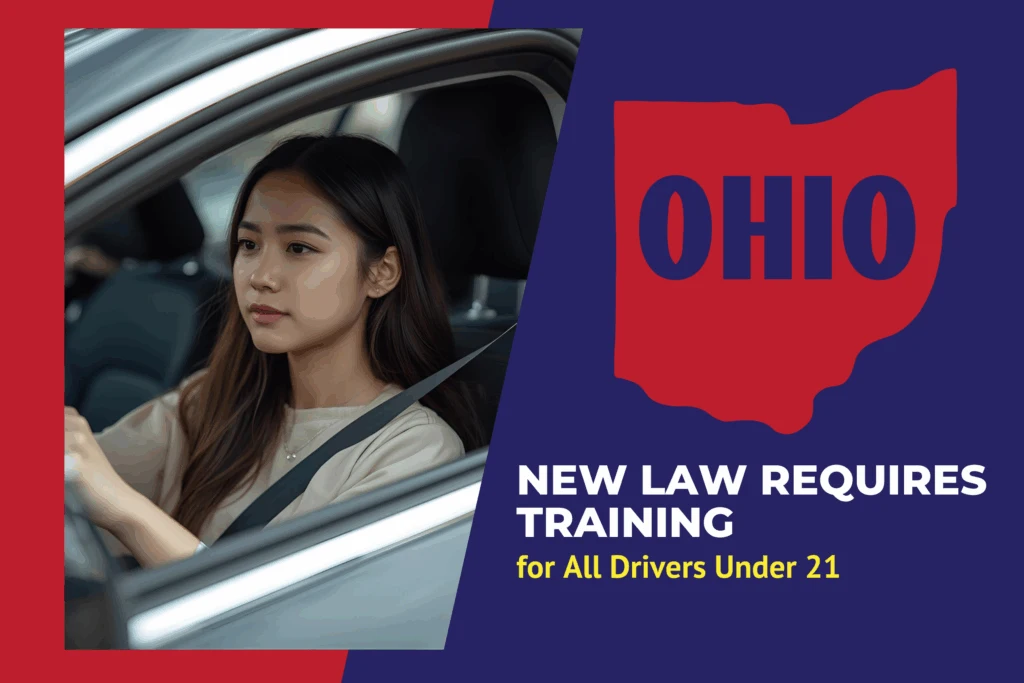
Ohio Driving Laws 2025: Why Most Teens and Parents Are Not Fully Informed
Ohio driving laws 2025 are more comprehensive and more strictly enforced than most families realize. Every year, Ohio updates its traffic laws — and in 2025, the rules governing distracted driving, teen passenger limits, nighttime driving restrictions, permit supervision, and probationary license conditions have all become more specific.
At Youth Driving Schools, instructors consistently find that 70% of new students do not know the current Ohio driving laws that apply directly to their situation.
The consequences of this gap are measurable: unexpected tickets, insurance increases, permit suspensions, road test delays, and in the worst cases, serious crashes.
This guide covers every Ohio driving law that teens, parents, and new adult drivers need to know in 2025 — from the first permit application to the removal of probationary license restrictions. For teens currently enrolled in driver education, the Teen Program at Youth Driving Schools covers Ohio’s current driving laws as part of the 24-hour curriculum.
Ohio’s Graduated Driver Licensing System: The Foundation of All Teen Driving Laws
Ohio uses a Graduated Driver Licensing (GDL) system for every driver under 18. The GDL system controls all driving privileges from the first temporary permit through the probationary license phase — including permit rules, road test eligibility, passenger restrictions, nighttime curfews, and parent responsibilities. If your teen is between 15½ and 18 years old, every one of these rules applies with no exceptions.
Age Requirements and Driving Privileges Under the Ohio GDL System
Ohio’s GDL system assigns driving privileges based on age and completion of specific requirements. The minimum age to apply for a Temporary Instruction Permit (TIPIC) is 15 years and 6 months.
Between the ages of 15½ and 18, teens must complete 24 hours of classroom or online driver’s education and 8 hours of professional behind-the-wheel training with a certified instructor before they are eligible to schedule a road test.
After passing the road test, a teen under 18 receives a probationary license — not a full Ohio driver’s license. A full unrestricted license is only available to drivers 18 and older who have met all prior GDL requirements.
The most common family error is misunderstanding the timeline. Completing driver’s education does not automatically make a teen eligible for a road test. The 6-month permit rule applies regardless of when education is completed.
The Ohio 6-Month Permit Rule: The Most Common Cause of Road Test Delays
Before scheduling the Ohio BMV road test, a teen must hold their Temporary Instruction Permit for a minimum of six consecutive months. This six-month period begins on the issue date printed on the permit — not the date the teen began driving lessons or completed their driver’s education program.
If the permit expires before six months have passed, the teen must retake the Ohio BMV knowledge test, obtain a new permit, and restart the six-month period from the new issue date.
This is one of the most common and preventable reasons teens lose months of progress in the licensing process. Families should track the permit issue date and plan road test scheduling accordingly. The Ohio BMV road test can be scheduled only after the six months are confirmed complete.
Ohio Temporary Instruction Permit (TIPIC) Laws Every Family Must Know
The Ohio TIPIC comes with a specific set of legal requirements that many families misunderstand or unknowingly violate. A violation during the permit phase can result in suspension of the permit and a reset of the six-month eligibility period.
Who Must Supervise a Teen with a TIPIC Permit
A teen holding a TIPIC must always drive with either a parent or legal guardian seated in the front passenger seat, or with a licensed adult who is at least 21 years old — but only if the parent or guardian has explicitly authorized that adult to supervise.
This authorization cannot be assumed. The supervising adult must be sober, positioned in the front seat, and physically capable of taking control of the vehicle in an emergency. There are no exceptions to this supervision requirement under Ohio law.
Where and When a TIPIC Permit Holder Can Drive
A teen with a TIPIC cannot drive unsupervised under any circumstances. This includes driving to school, driving to work, driving on private property, and driving in an otherwise empty parking lot.
Every time a teen with a TIPIC is behind the wheel, a qualified supervising adult must be present. Driving without supervision during the permit phase is a violation of Ohio law and can result in loss of the permit.
Passenger Rules During the TIPIC Permit Phase
During the permit phase, the supervising adult must be seated in the front. Additional passengers are not legally prohibited, but Youth Driving Schools strongly recommends limiting passengers during permit-phase practice.
Research consistently shows that each additional person in the vehicle increases cognitive distraction — and during the permit phase, when a teen is still developing hazard perception and vehicle control, any unnecessary distraction reduces the quality of the practice session and increases risk. The Ohio 50-hour supervised practice requirement is most effectively completed with minimal distractions.
Ohio Probationary License Laws for Teens Under 18
Once a teen passes the Ohio BMV road test, they receive a probationary license. This is not a full driver’s license. It comes with specific legal restrictions that apply from the day the license is issued and that many families are not aware of until a violation occurs.
Nighttime Driving Restrictions on Ohio Probationary Licenses
During the first 12 months of holding a probationary license, Ohio law prohibits teen drivers from operating a vehicle between midnight and 6:00 a.m. unless accompanied by a parent or guardian. After the initial 12-month probationary period, the curfew shifts to no driving between 1:00 a.m. and 5:00 a.m. — with limited exceptions for documented work, school, or religious activities. Violation of nighttime driving restrictions can result in license suspension, mandatory safety programs, and delays in upgrading to a full license.
Passenger Limits Under Ohio’s Probationary License Law
Ohio’s probationary license passenger restrictions are among the strictest in the United States — and for documented safety reasons. During the first 12 months after receiving a probationary license, a teen may not have any unrelated peer passengers in the vehicle unless a parent or guardian is also present. After 12 months, only one unrelated passenger is permitted without a parent present.
The data behind this law is direct: teen crash risk increases 44% with one peer passenger, doubles with two, and quadruples with three. Understanding why professional driver education addresses peer passenger distraction as a specific hazard category helps parents reinforce these legal restrictions at home.
Ohio Seatbelt Law and Teen Driver Liability
Ohio law requires all occupants of a vehicle to wear a seatbelt at all times. For teen probationary license holders, this rule carries an additional legal dimension: if any passenger in the vehicle is found unbelted, the teen driver is cited — not the unbelted passenger.
The financial and licensing consequences fall on the driver. Teen drivers are legally responsible for ensuring that every person in their vehicle is properly restrained before the vehicle moves.
Ohio’s Zero-Tolerance Alcohol and Drug Law for Underage Drivers
Ohio enforces a strict zero-tolerance policy for alcohol in drivers under 21. Any detectable blood alcohol content in a driver under the legal drinking age — even an amount well below the adult legal limit of 0.08% — constitutes a violation.
Consequences include immediate license suspension, criminal charges, mandatory intervention programs, BMV penalties, and significant insurance consequences that can follow a young driver for years. The zero-tolerance law applies to all drivers under 21, including those with a TIPIC permit and those with a probationary license. Understanding this law is part of the Ohio driving curriculum covered in the Teen Program.
Knowing Ohio Driving Laws Is the First Step to Staying Safe and Licensed
Ohio driving laws exist to protect new drivers during the years they are statistically most at risk. Teens and parents who understand the graduated licensing rules, permit requirements, and probationary restrictions move through the system faster and avoid the violations that delay full licensure.
Some Ohio driving laws deserve a closer look: see our complete guides to the 2026 hands-free distracted driving law and the step-by-step Ohio teen driver’s license process. The NHTSA teen driving resources explain why these graduated rules reduce crashes.
The best way to master these rules in practice is with a licensed instructor. Explore the Youth Driving Schools Teen Program and Adult Program to build safe, law-compliant driving habits from your first lesson.



.webp)